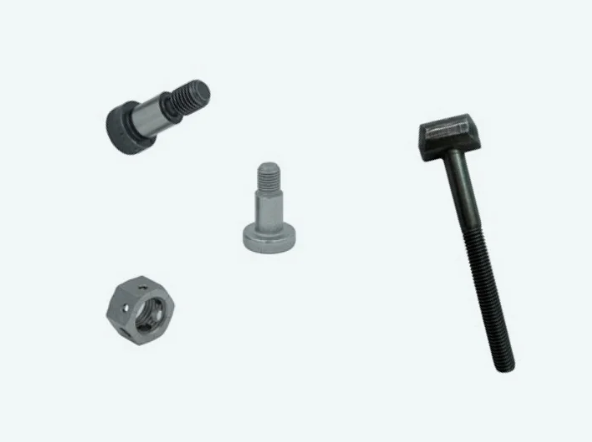

Vibration rarely announces itself during any industrial process. On crushers, conveyors, and mobile mining plants, joints tightened to required specification can quietly shed their grip long before anything visible goes wrong. By the time a fastener rattles or a bracket shifts, the damage has usually started. Choosing the right machine bolts early prevents that slow, hidden loss.
Grade matters more than most maintenance schedules assume. Higher-tensile fixings hold more clamp load, and clamp load is what stops movement inside a joint. Specifying machine bolts at the correct property class gives industrial equipment a wider margin against self-loosening, longer service intervals, and fewer emergency shutdowns caused by joints that opened under load.
Why Correctly Tightened Joints Still Come Loose under Vibration
The Gap between Tightening and Staying Tight: A bolt tightened to the right torque can still fail to stay tight, because torque and clamp load are not the same thing. Friction under the head and in the threads absorbs most of the applied effort. What reaches the joint as usable tension varies, and vibration finds whatever margin is missing.
Sideways Movement That Standard Fixings Cannot Resist: Self-loosening starts when the clamped parts slide sideways against each other, not when the bolt simply shakes. That slip lets the threads back off in small increments until no tension remains. Laboratory work using transverse vibration testing shows how fast this happens once friction between the mating faces is overcome under load.
Damage That Grows during Continued Production: Postponing action narrows the options available later. A loosened joint lets the hole elongate, the flange fret, and the bolt take bending loads it was never sized for. In everyday maintenance practice, engineers routinely see machines where one neglected fixing led to a scored housing that needed line boring rather than a new bolt.
See also: What Happens Inside Egyptian Cotton Sheets During Their First 30 Washes
What Higher Grades Deliver on Shock-Loaded Machinery
Higher Clamp Load as the First Line of Defence: Stronger property classes allow greater installed tension, which keeps the mating faces locked together when shock arrives. A joint that never slips cannot loosen by the usual mechanism. On crushers and screens, that difference shows as fixings holding position through a full production campaign rather than a single week of running.
Fatigue Resistance under Repeated Impact: Fatigue failures begin at the thread root, where stress concentrates during every load cycle. A well-tensioned high-grade fixing sees only a small share of the fluctuating load, since the clamped joint carries most of it. Rolled thread manufacturing leaves compressive stress at the root and pushes the point of likely failure further away.
Choosing between Standard Grades, Higher Grades, and Locking Systems
Where Standard Grades Remain Sensible: Lower property classes still suit static, sheltered assemblies where loads are steady and access is easy. They cost less and tolerate rougher handling. The trade-off appears the moment the assembly starts moving, because the reduced tension available leaves a narrower margin before slip begins and the joint gradually works loose in service.
Why Locking Devices Work Best as a Second Layer: Thread lockers, wedge washers, and prevailing torque nuts each have a place, though none replaces adequate tension. Adhesives soften at elevated temperature. Mechanical devices add cost per joint and complicate rework. The dependable arrangement pairs a correctly specified high-grade fixing with one locking method chosen for the temperature and duty of that machine.
Value That Builds across the Life of a Machine
Fewer Stoppages across a Maintenance Cycle: The financial case for high-strength machine bolts rests on avoided stoppages rather than the price of each fixing. A conveyor drive that loses an hour to a loosened mount costs more than the grade difference across the whole machine. Sites that upgrade critical joints report longer intervals between inspections and fewer repeat failures.
Protection for the Parts around the Joint: Holding tension protects everything the fixing passes through. Housings keep their bores round, flanges stay flat, and gaskets seal against faces that have not been fretted by micro-movement. High-grade machine bolts preserve those surfaces for years, which matters because a fastener is inexpensive to replace and a machined housing rarely is.
Checks That Keep Bolted Joints Secure in Harsh Duty
Checks Worth Building into Routine Inspection: Sound specification only pays off when installation and inspection follow it. Most repeat failures on vibrating plants trace back to a small number of avoidable habits, and correcting them costs very little. The points below cover what deserves attention on machine bolts working under continuous vibration and repeated impact loading.
- Tighten to a defined tension target rather than by feel, since operator judgement varies.
- Clean and dry threads before assembly, because contamination changes the friction governing installed tension.
- Replace any fixing that has survived a loosening event, as it may carry fatigue damage.
- Watch joint faces for rust powder, polished patches, or witness marks indicating movement.
- Re-check tension after the first hours of running, when embedment losses peak.
Machinery That Holds Its Grip through Every Shift
Joints that hold their tension change the character of a maintenance department. Inspections become confirmations rather than searches, spares stay on the shelf, and the shift plan survives contact with reality. That reliability comes from ordinary decisions made early, where grade, finish, and locking method are chosen for each application.
Every campaign run on under-specified fixings makes the next repair larger and the next stoppage longer, because wear migrates from the fastener into the parts around it. The sooner critical joints are reviewed, the cheaper that review proves. Speak to a fastener engineering team for an assessment of your highest-risk joints and a specification matched to the duty.