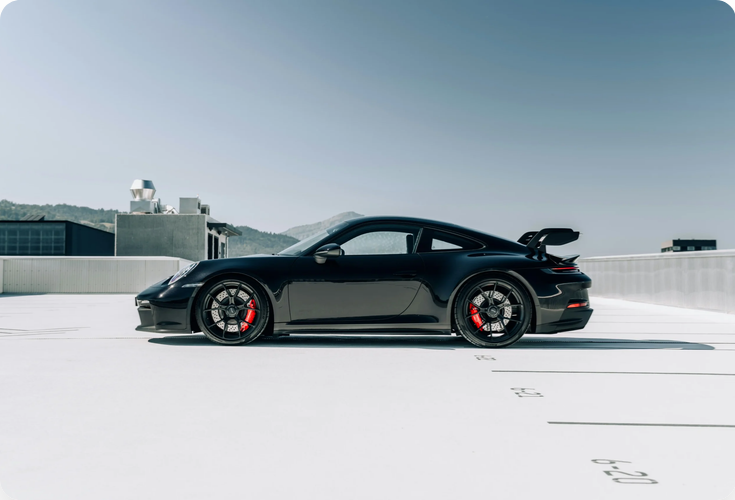

Your Porsche just got involved in an accident. Maybe it was a parking lot scrape, maybe something worse on Highway 50. Either way, the insurance adjuster hands you a list of repair shops and tells you to pick one. That list is where a lot of Porsche owners make a decision they regret two years later, when the resale value comes in low, and nobody can quite explain why. Finding a certified body shop matters more for this car than it would for a Camry, and the reasons are structural, not snobbish.
A Porsche is not built like an average sedan. The materials are different, the bonding methods are different, and the electronics buried behind the panels are different. A Porsche certified body shop understands that a repair which looks perfect from three feet away can still be wrong underneath. Here is why that gap between “looks fixed” and “is fixed” should worry you.
What Makes Porsche Collision Repair Different
Start with the metal. Porsche uses aluminum extensively across its lineup, and aluminum behaves nothing like steel during repair. It work-hardens. It cracks instead of stretching. It cannot be heated the same way, and it cannot share tools or workspace with steel without risking galvanic corrosion, which eats the panel from the inside out over months.
That last point catches people off guard. A shop that sands a steel fender and then works your aluminum door with the same equipment can leave steel particles embedded in the aluminum surface. You will not see anything for a while. Then the bubbling starts.
Then there is the adhesive question. Modern Porsche construction relies on structural bonding alongside welding. The manufacturer specifies the adhesives; they cure under controlled conditions, and substituting a generic equivalent changes how the structure absorbs impact in a second collision. Nobody plans for a second collision. That is rather the point.
See also: How Custom Facial Treatments in Fresno Address Changing Skin Needs Throughout the Year
Why Uncertified Repairs Cost You Later
The invoice is not the real cost. The real cost shows up in three places.
- Resale value. Porsche buyers check history. A repair documented with OEM parts and proper procedures reads differently than one with aftermarket panels and no paperwork trail.
- Safety systems. Sensors, cameras and radar units sit inside bumpers, mirrors and windshields. Move them a few millimeters without recalibration, and the car still drives fine until the day it needs to brake for you.
- Paint failure. Porsche finishes involve specific layer counts and clearcoat chemistry. A close color match under shop lighting can look obviously wrong in daylight six months on, once the new paint has fully cured and settled.
Perhaps the most frustrating part is that none of this is visible when you collect the car. It looks great. You drive away happy. The problem surfaces later, at the worst possible moment.
Questions to Ask Before You Approve a Porsche Repair
You do not need technical knowledge to protect yourself. You need four questions.
- Will you use OEM Porsche parts? If not, which parts are being substituted, and why?
- Does the shop have separate aluminum work areas and dedicated tooling?
- What ADAS calibration is being performed after the repair, and is it documented?
- What training and certification does the technician working on this car hold?
Ask these before repairs start, not after. A shop that hesitates on any of them is telling you something useful.
Most owners assume the insurance-recommended shop has already been vetted for their specific car. That assumption is doing a lot of work it was never designed to do. Insurers maintain networks based on cost control and cycle time, which are reasonable business priorities and not the same thing as verifying that a shop can properly repair a mid-engine sports car.
Your Right to Choose Your Own Body Shop
Here is the part insurers rarely lead with. In California, you choose the repair facility. Your insurer can recommend, and they often will, but the decision is yours. Steering a policyholder to a particular shop is restricted under state regulation.
That single fact changes the conversation. You are not stuck with the list.
What Certification Actually Signals
Certification is not a sticker. It means technicians have completed structured training on specific repair procedures, that the shop invests in equipment matching what those procedures require, and that someone external has verified both.
Relux Collision holds I-CAR Gold Class recognition, which the collision repair industry treats as the highest role-relevant training standard available. The shop maintains a dedicated Porsche repair capability alongside work on Audi, BMW, Bentley, Ferrari, Lamborghini, McLaren, Mercedes-Benz, Tesla and Rolls-Royce. Calibration services and diagnostic scanning are handled in-house, so the electronic side of the repair does not get subcontracted out and forgotten.
Next Steps After a Porsche Collision
Photograph everything before the car moves. Get a copy of the estimate in writing, including the parts list. Then get a second opinion from a shop that specializes in the car rather than volume.
Deductible assistance of up to $1,000 is available through the Relux Cash Back program, which takes some pressure off the decision if cost is what is pushing you toward the cheaper option.
Call 916-621-5306 or request a quote at reluxcollision.com/get-a-quote/ to have the damage assessed properly.